Mau Asam Travel
With us you're just better off!
011 599 9 788 9969
+599-9-674 0555 (WhatsApp)
With us you're just better off!
011 599 9 788 9969
+599-9-674 0555 (WhatsApp)

Nampula is the largest city in northern Mozambique and the capital of Nampula Province. Set inland on a plateau, it is surrounded by rounded granite hills and distinctive rocky outcrops that rise above the surrounding farmland. The city is a major commercial, transport and administrative centre, linking agricultural districts of the interior with the port of Nacala on the Indian Ocean. Rail and road routes converge here, while markets and trading businesses serve communities across northern Mozambique. Nampula’s higher elevation gives it a somewhat milder climate than the humid coastal areas farther east.
The city lies within the cultural heartland of the Makhuwa, Mozambique’s largest ethnolinguistic group. Emakhuwa is widely spoken alongside Portuguese, and Makhuwa traditions remain important in surrounding rural communities. Music, dance, oral storytelling and ceremonies accompany family and community events, while crafts include pottery, basketry and objects woven from plant fibres. The National Museum of Ethnology in Nampula provides a detailed introduction to Mozambique’s cultural diversity, displaying masks, musical instruments, household objects, sculptures and tools. Its collections represent peoples from across the country while giving particular context to the traditions of northern Mozambique.
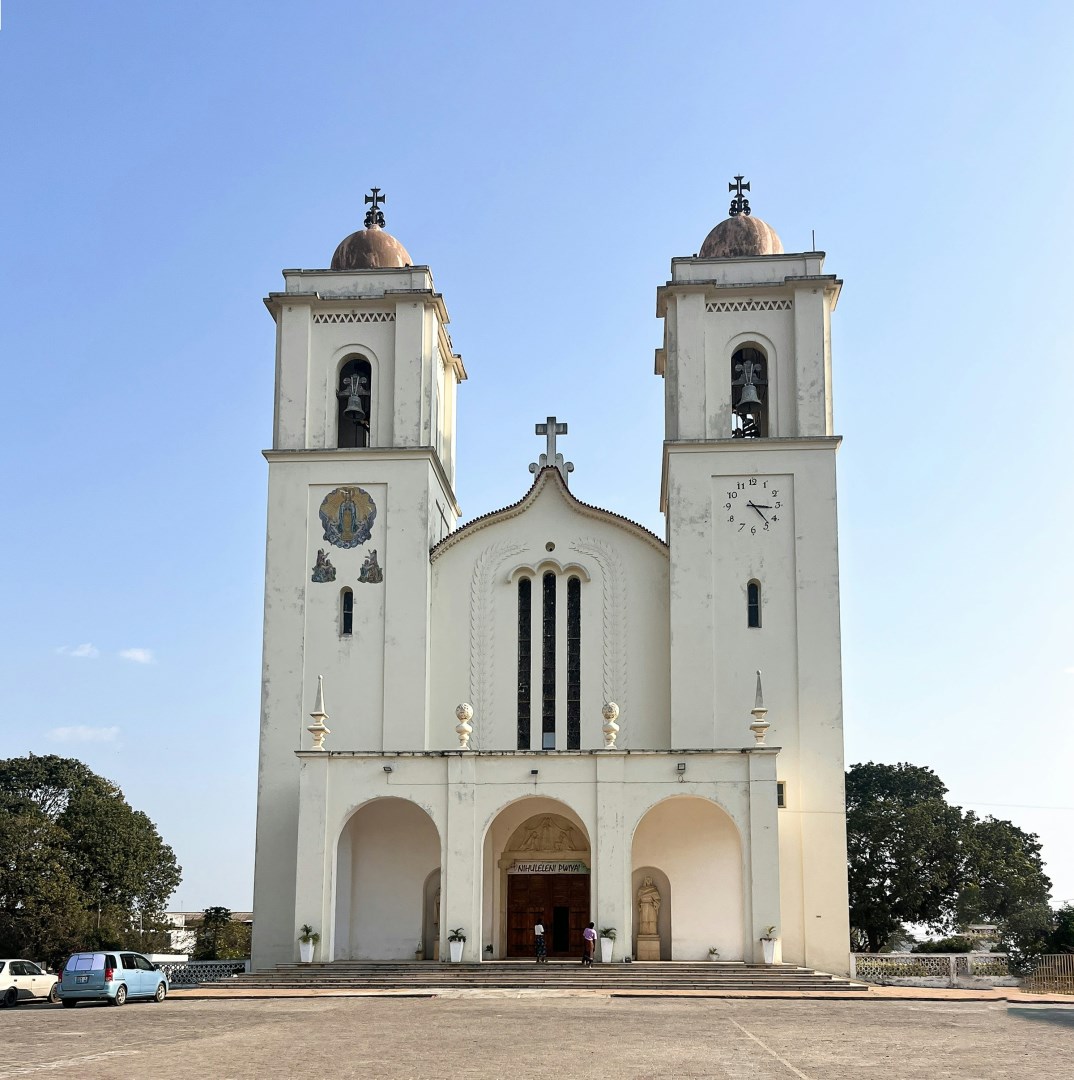
Nampula’s most recognizable natural features are the granite inselbergs scattered across the surrounding landscape. These isolated formations create steep domes and irregular peaks above cultivated plains and woodland. Within the city, the Cathedral of Our Lady of Fatima is a prominent architectural landmark, distinguished by twin towers and a large central façade. The National Museum of Ethnology is another important site, with galleries devoted to traditional technologies, beliefs and social life. Nampula also provides a practical base for journeys east toward Ilha de Moçambique, a UNESCO World Heritage Site, and the beaches and coral-rich coastline of Nampula Province.
Food in Nampula reflects the agricultural production of northern Mozambique. Cassava, maize, beans, peanuts and leafy vegetables are common ingredients, while rice and coconut become increasingly prominent toward the coast. Matapa, made from cassava leaves and often cooked with ground peanuts and coconut milk, is widely eaten with rice or xima. Chicken and goat are also common, while markets sell bananas, mangoes and other seasonal produce. Cashew nuts are particularly important in Nampula Province, one of Mozambique’s major cashew-producing areas. The crop provides both household income and a familiar ingredient in snacks and local cooking.